 Updated: May 13, 2025

Project managers are responsible for guiding a project through all its phases and delivering what was promised within the given constraints.
This is a key role in project management, and project managers assume different responsibilities depending on the industry they work in.
We’ll try to dispel the mystery of what project managers actually do and reveal a few career options if you’re interested in becoming one.

- Project managers make sure every project is completed on time and within budget.
- The key responsibilities of project managers include defining a project’s scope, planning and overseeing activities, and communicating with all stakeholders.
- A major part of a project manager’s job requirement is to document every change and progress made.
- Anyone can become a project manager with the right skills and experience. There are also certifications aspiring PMs can obtain to land a role more easily.
What is a project manager?
A project manager is the person responsible for planning, organizing, and controlling projects so that they’re delivered on time and within budget.
These are highly organized and goal-oriented people who lead projects in ways that align with the business goals and strategies of their organization or client.
Project managers also oversee operations to ensure everyone is doing their job and everything is functioning properly.
Product manager vs project manager
The main difference between a product manager and a project manager is that while the product manager creates a vision for the product, the project manager helps bring that vision to life.
In other words, product managers are focused on the development of the product and its quality rather than following strict timelines.
Project managers, on the other hand, can take on any type of project and make sure it’s delivered within constraints like scope, time, and budget limits.
Also, a project manager can take on a few projects at a time, while a product manager will usually only be responsible for one product for a long period of time.
💡 Plaky Pro Tip
The role of a project manager often gets confused with other similar roles. Check out how it differs from product owners and project coordinators:
What are the roles and responsibilities of a project manager?
The key responsibilities of a project manager over the course of a project are to:
- Define the scope,
- Plan and organize tasks,
- Manage resources,
- Create, organize, and motivate teams,
- Assess and manage risks,
- Manage changes,
- Negotiate with contractors and suppliers,
- Communicate with stakeholders,
- Document progress,
- Collect signatures, and
- Help improve employee engagement.
Let’s see what each of these project manager duties entails in more detail.
#1 Define the scope
Once a project is approved, the project manager needs to define the project scope.
The scope is the direct result of the project manager’s understanding of the project, as well as a detailed layout of all the work that needs to be done in the future.
This makes defining the scope a vital step in project planning. To avoid scope creep and project failure, it’s important to prepare a detailed scope statement and get it approved by all key stakeholders.
When creating the project scope, the key points the project manager needs to cover are:
- Defining specific goals the project aims to achieve,
- Outlining the resources required to carry out the project, and
- Monitoring and adapting the scope as the project progresses.
💡 Plaky Pro Tip
Thrive as a project manager by learning how to start a project in just a few easy steps. Find out more here:
#2 Plan and organize tasks
Planning and organizing tasks has to be done continuously, throughout the entire project, even though it sounds like a one-time commitment.
This step includes:
- Creating a project plan and a project management plan,
- Writing a scope management plan,
- Creating a risk management plan,
- Creating a work breakdown structure (WBS),
- Drafting a project roadmap,
- Scheduling,
- Planning report meetings, and more.
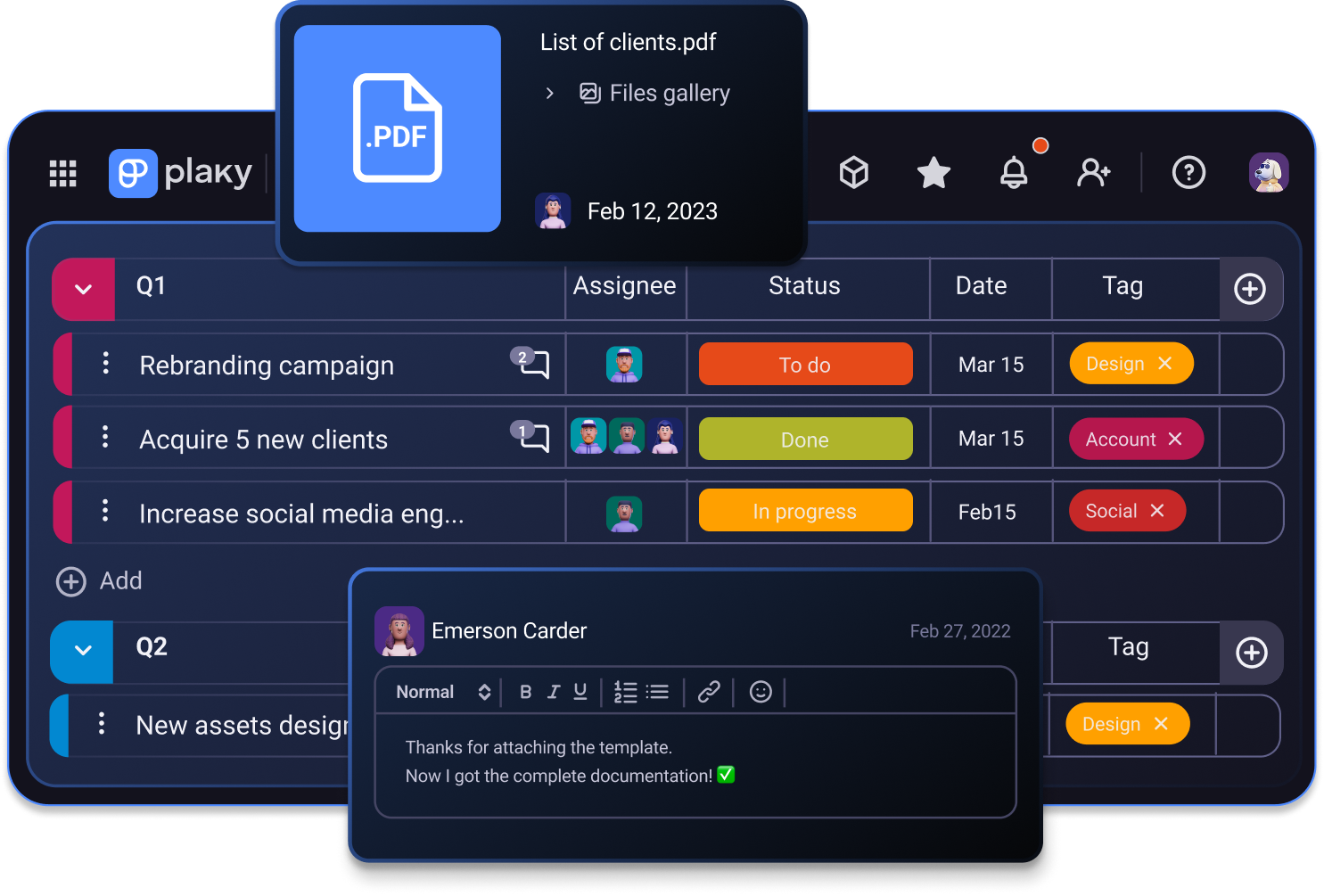
Planning allows project managers to answer the following questions regarding the deliverables:
- What do we need to do?
- How do we do it?
- Who should do what?
- When is the deadline?
- What are the project constraints?
Planning also serves to create clear guidelines for how risk, scope, change, budget, and schedule will be handled from start to finish.
This project phase involves allocating and prioritizing tasks, forming teams, and establishing a hierarchy so that everyone knows who to report to or ask for help at any given time.
💡 Plaky Pro Tip
The planning stage may vary significantly based on the approach or methodology used for the project at hand. Learn more about the project management methodologies commonly used today:
#3 Manage resources
Project resources are all the resources required to successfully complete a project or task, including:
- People,
- Time,
- Money, and
- Tools.
As project resources are often limited, the ability to effectively distribute and manage them is critical.
So, a good project manager will ensure that:
- All project teams are adequately staffed,
- Each team and team member has a manageable workload,
- Deadlines are realistic and achievable,
- The team has the necessary resources to complete their tasks,
- Everyone has the tools they need,
- The budget is managed efficiently, and
- All resources are reorganized and adapted to changing situations.
💡 Plaky Pro Tip
Time management accounts for delays and leaves “wiggle room” for the team, which is where float comes in. To learn more about float, take a look at this article:
#4 Create, organize, and motivate teams
A project manager is more than just someone who manages workflows, distributes tasks, rotates resources, and sorts documentation.
In larger projects, the project manager will organize several teams, whereas in smaller ones, they usually fill the role of the team lead as well.
Either way, the project manager must take steps to ensure that each team is:
- Made up of compatible people, and
- Staffed sufficiently to meet their objectives.
It’s up to the project manager to foster an atmosphere of trust and keep the team motivated — so they must also possess the soft skills necessary to excel in a leadership role, such as communication and teamwork.
#5 Assess and manage risks
Risk assessment and management are performed regularly throughout the project to identify potential threats to its development. The goal is to either eliminate or contain them.
Problems such as software bugs, supplier issues, equipment malfunction, and other complications can pop up at any moment, so it’s vital to be prepared.
“Preparation” in this context can vary based on the approach the project manager is taking.
For example, the Waterfall methodology involves extensive planning for any number of situations. Meanwhile, the Agile approach ensures the team has the flexibility to adapt to unforeseen changes.
Periodic risk assessments allow project managers to anticipate potential risks before they happen and take steps to prevent them ahead of time. This way, they can reduce the possibility of scope creep, budget creep, or some of the tasks getting sidetracked.
💡 Plaky Pro Tip
For a more in-depth look at project risks and how to manage them, take a look at this article:
#6 Manage changes
It’s important to constantly monitor the plan and establish a change control procedure. The goal of this procedure is to:
- Discourage people from suggesting unnecessary changes,
- Make sure only the necessary changes are approved, and
- Avoid scope creep.
The change control procedure will often include a filled-out change request form, which requires you to justify the reasons for the change and explain the impact it will have on the project as a whole.
The form is then:
- Reviewed,
- Discussed with relevant stakeholders, and
- Either accepted or rejected.
Managing changes based on the pre-established change control plan is a process that should be continuously performed throughout the project.
For additional insight into this subject, we reached out to Zoran Vizmeg, former Technical Program Manager at CAKE.com.

“During project execution, plans can have minor flaws. Those flaws must be detected and solved. Imagine that you have massive machinery with lots of different types and sizes of gears. As PMs, we must arrange those gears into perfect working order, listen to them, and lube if they squeak somewhere until we perfect that mechanism.”
#7 Negotiate with contractors and suppliers
Negotiating contracts and rates directly correlates with managing project resources.
To be good at negotiating, a project manager must:
- Be good at handling people,
- Have excellent communication skills, and
- Always remember that negotiation is not a competition.
In other words, the goal is not to out-negotiate the other person but to reach a mutually beneficial deal.
💡 Plaky Pro Tip
There are quite a lot of good project management books, but we’ve narrowed the list down to the best 20 in this guide:
#8 Communicate with project stakeholders
The point of maintaining constant communication with all key stakeholders for the duration of the project is to:
- Keep the stakeholders informed about the project’s progress,
- Gain feedback and approval regarding changes or finished deliverables, and
- Avoid major changes near the end of the project.
However, as straightforward as all the above may seem, there may be stakeholders who think:
- They know what they want,
- They have communicated clearly what they wanted during the first meeting, and
- Their remaining involvement in the project consists of waiting for the final product to be delivered.
To prevent the project from spiraling, project managers must be bold, assertive, and insistent. This often includes persistently “chasing” stakeholders to get the required feedback and approval as the project progresses.
If project managers don’t communicate regularly and openly, stakeholders might end up unsatisfied, and the project can fail.
#9 Document progress
Documenting all changes, approvals, and progress is an important part of a project manager’s job, no matter how tedious the process is.
Some of the most important documents project managers need to write are the:
- Business case,
- Project charter,
- Work breakdown structure (WBS),
- Scope statement,
- Scope management plan,
- Status reports, etc.
All this documentation may seem unnecessary, but it’s always better to be safe than sorry in case of emergencies or potential legal issues.
Detailed documentation, when properly reviewed and archived, can also serve as a point of reference for similar projects in the future and help prevent the issues that plagued past projects.
📖 There are many more documents and project management terms you can read about in our Project Management Glossary of Terms.
#10 Collect signatures
A signature at the bottom of any project management document is a sign that the document has been reviewed and approved. This signature signals that both you and the client agree on the state of the finished work.
Official sign-off can prevent simple miscommunication and even serve as evidence in case of a legal dispute.
#11 Help improve employee engagement
Low engagement can have a longer-reaching effect on companies as a whole and be especially detrimental for individual projects for a number of reasons:
- Disengaged employees are more likely to make mistakes.
- Subpar work requires more resources for corrections.
- Team members can be demoralized due to their colleagues leaving.
- Organizational issues can come up due to vacancies.
A project manager can help improve engagement in several ways. For example, they can:
- Ensure every team member feels acknowledged in their role,
- Offer employees flexibility and autonomy in how they approach their tasks,
- Create incentives to promote productivity and accountability,
- Prevent overtime or undue stress,
- Regularly collect feedback, and
- Participate in planning team-building exercises, professional development activities, and workshops.
The exact level and nature of a project manager’s engagement will depend on the size of the project team and the specifics of the company’s employee engagement strategy.
💡 Plaky Pro Tip
Employee engagement is closely tied to employee experience (EX). Learn more about it here:
What do project managers do in different industries?
Regardless of the industry, project managers are leaders and coordinators whose main responsibility is to keep the project from going off the rails and help it reach its final goal.
However, there are differences from industry to industry.
IT project manager responsibilities
IT project management includes software development and managing IT processes and software used within an organization.
Much like any other project manager, a PM in the software industry is required to:
- Map out the project,
- Gather requirements,
- Allocate tasks and resources,
- Schedule tasks,
- Organize the workflow,
- Communicate with stakeholders, and more.
IT project managers must also be quick-thinking and adaptable as the nature of software development includes lots of moving parts and task dependencies.
So, the IT industry favors an Agile approach to project management because it prioritizes flexibility over complex planning. This allows teams to deliver a functional project faster and resolve issues as they arise.
As the IT industry itself is changing rapidly, an IT project manager must be adaptable and open to learning over the course of their career to stay ahead of the latest innovations and changing trends.
💡 Plaky Pro Tip
Interested in learning more about software development or looking for better tools for the job? Here are a few articles you may find interesting:
Construction project manager responsibilities
In contrast to IT, construction project management prefers traditional approaches, like Waterfall.
A project manager in construction has most of the same responsibilities as any other. However, due to the nature of construction projects, the focus is placed on:
- Time management — Construction projects usually involve lots of manpower, raw materials, and expensive equipment. So, to avoid delays and significant losses, project managers must develop meticulous construction schedules.
- Resource and equipment management — Construction relies on lots of energy-intensive vehicles and machines that require careful operation and maintenance, so proper management is key.
- Workplace safety — Construction is one of the most dangerous professions, as fatalities in construction and extraction industries are caused by falls, slips, and trips. So, ensuring compliance with safety regulations is among the most important PM responsibilities.
HR project manager responsibilities
Compared to other industries, HR project management is more people- than product-oriented.
The responsibilities of HR project managers also include planning, scheduling, and executing a string of smaller tasks that eventually get the project done — but most of the time, the project’s end result is intangible.
For example, HR project managers are responsible for:
- Turning business objectives into a series of actionable plans for future projects,
- Facilitating meetings,
- Motivating and coaching team members and other team leaders,
- Writing progress reports,
- Communicating with third parties,
- Implementing communication policies within an organization, and
- Ensuring consistency and fairness regarding recruitment, termination, salary, and benefits, and their strict adherence to the law.
In the end, HR project managers are less project managers who work in HR, and more HR professionals with excellent project management skills.
💡 Plaky Pro Tip
Like any other industry, HR project managers need the best tool for the job. If that’s what you’re looking for, we suggest taking a look at the following article:

What do project managers do on a daily basis?
The role of the project manager may seem vague, and their activities on a daily basis sometimes look like a mystery. In general, though, on most days, project managers will:
- Sync with the team — Daily meetings help keep everyone on track and informed on who’s doing what and if they’re encountering any difficulties while performing their tasks.
- Check project progress — The project team is often not the only group of people that influences the project progress. External stakeholders and factors can also have an impact on the project development, so project managers need to check in with them daily.
- Update the documentation — Any changes and updates have to be documented and included in reports.
- Control expenses — Every day spent on a project will create costs, so project managers have to make sure that they’re not exceeding the estimates. No matter if the costs are unavoidable or planned, they must be included in the daily reports.
- Communicate with clients — Respecting the client’s wishes is imperative, so making sure that the project is headed in the right direction should be a daily activity.
- Review the project timeline — Project managers should set a deadline for each activity and milestone and regularly check whether the project’s development is progressing according to plan. The original timeline may change multiple times. The key is to notice the deviation, inform the right people, and make the necessary adjustments ASAP.
Depending on the industry they’re in, project managers have additional daily responsibilities.
For example, a project manager involved in a renovation project will have to visit the site in person almost every day. Meanwhile, a manager working in an Agile environment will dedicate a lot of time to perfecting the acceptance criteria for each item.
💡 Plaky Pro Tip
Great project managers are not born, they are made. Here are some simple tips to help you take your project management skills to the next level:
What software do project managers use?
Project management requires flawless organizational skills, the ability to pivot and re-synchronize tasks throughout the project’s life cycle, and keep track of the team’s progress and schedules along the way.
Here are the essential types of software project managers will need to optimize their processes:
- File sharing and collaboration,
- Time tracking,
- Project management, and
- Communication.
Let’s take a look at them in a bit more detail.
#1 File sharing and collaboration
Every team needs certain tools to create documents of various kinds and share ideas. This includes text files, presentations, spreadsheets, etc.
One of the best collections of apps that has become essential in modern business is Google Workspace.
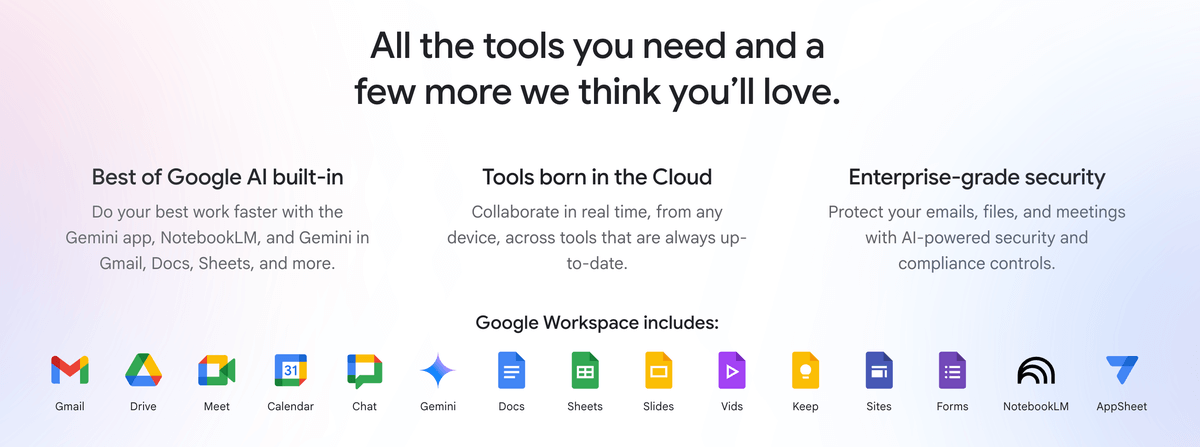
Google Workspace comprises several powerful cloud-based apps:
- Google Docs — a text editing tool excellent for creating project proposals and reports, as well as seamless collaboration between team members,
- Google Sheets — a spreadsheet app great for planning, scheduling, and creating various charts,
- Google Slides — a presentation app that makes it easy to create rundowns, summaries, and simple reports for either the project team or the stakeholders,
- Google Forms — a survey app especially useful for collecting feedback,
- Google Drive — cloud storage that provides a convenient way to safely store important documents, files, and resources while keeping them readily accessible to all team members,
- Google Calendar — a widely popular app that integrates with other scheduling tools and makes it easy to set up meetings, and
- Google Meet — a reliable app for audio and video calls and conferencing.
Overall, Google Workspace apps all provide excellent collaboration tools that work within a highly functional system, complete with integration options for third-party apps.
💡 Plaky Pro Tip
Looking for an alternative to Google Sheets? Here’s our comparison with its main competitor:
#2 Time tracking
Tracking time is important in project management because working hours and hourly rates are the foundation of project costs.
Clients will often request time reports with detailed accounts of what the team worked on and for how long. This is where apps like Clockify enter the scene with a user-friendly interface and all the necessary features.
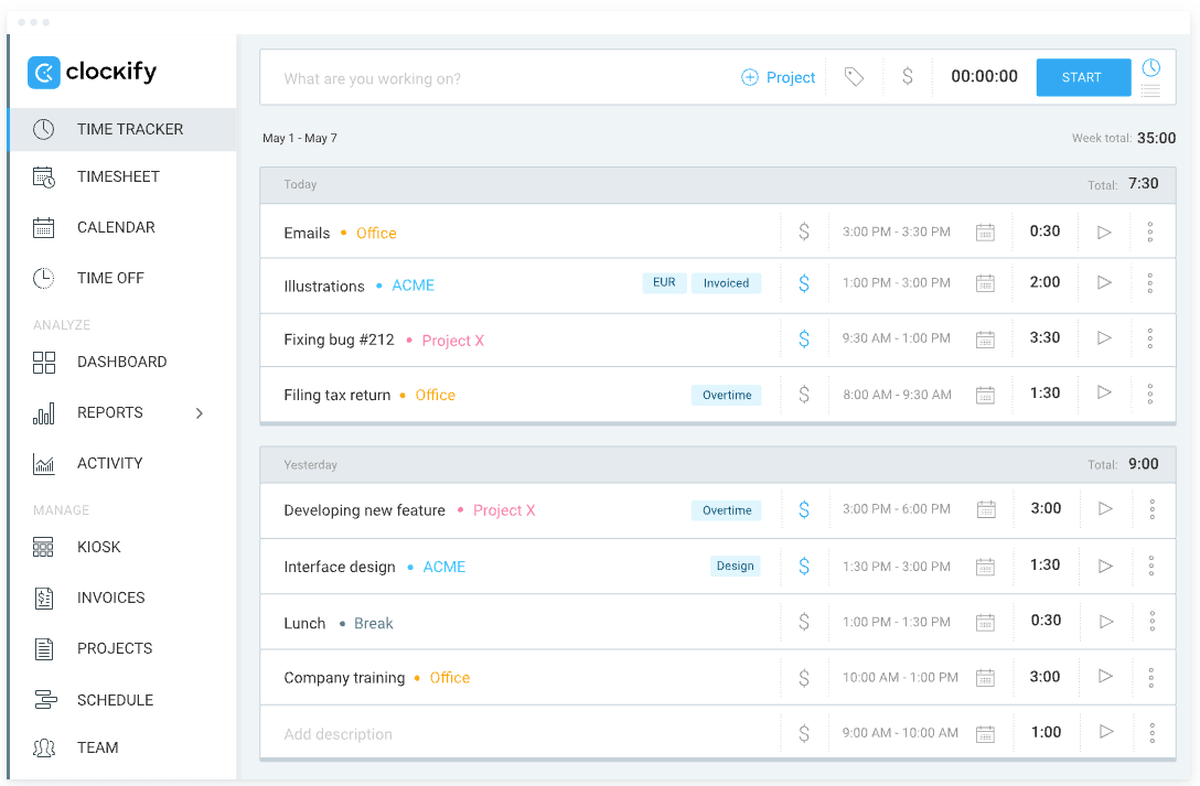
Clockify helps with overall work organization and comes with:
- An integrated time tracker,
- Calendar,
- Easy-to-review timesheets, and
- A comprehensive dashboard.
The data provided by Clockify can also help project managers track time-based project KPIs, set better deadlines, and assist with workload management.
#3 Project management
Project managers can’t and shouldn’t live without a project management tool. These apps help greatly in organizing day-to-day tasks, keeping track of progress, and making sure all assignments are delivered on time.
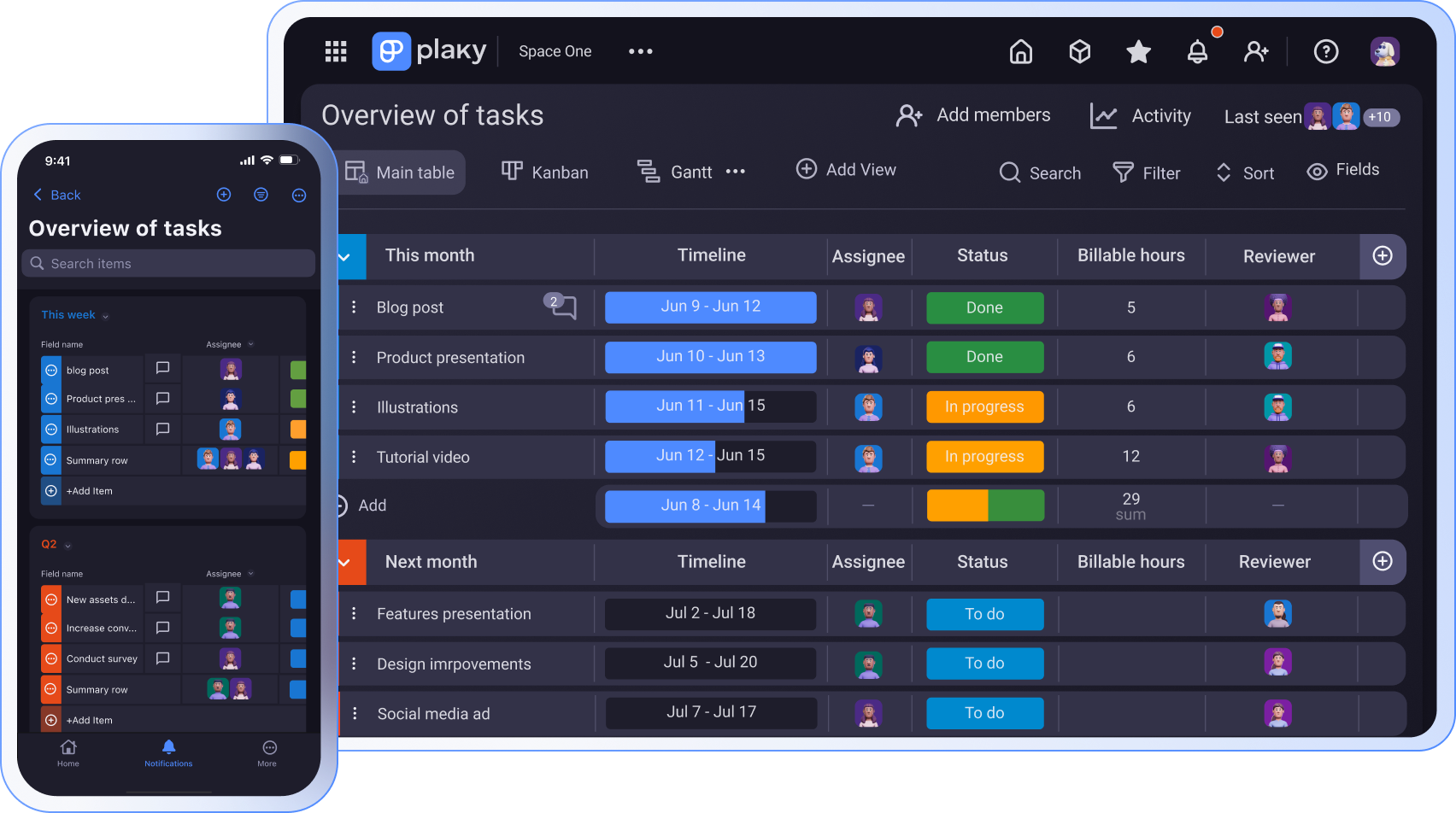
A project management app like Plaky greatly helps with managing the overall project thanks to many useful features that let project managers:
- Create detailed task briefs and assign items to team members,
- Track assignees and task progress,
- Choose between different board views,
- Communicate via comments,
- Share important files,
- Monitor team activity and changes, and
- Even track time directly though the app using the Plaky’s integration with Clockify.
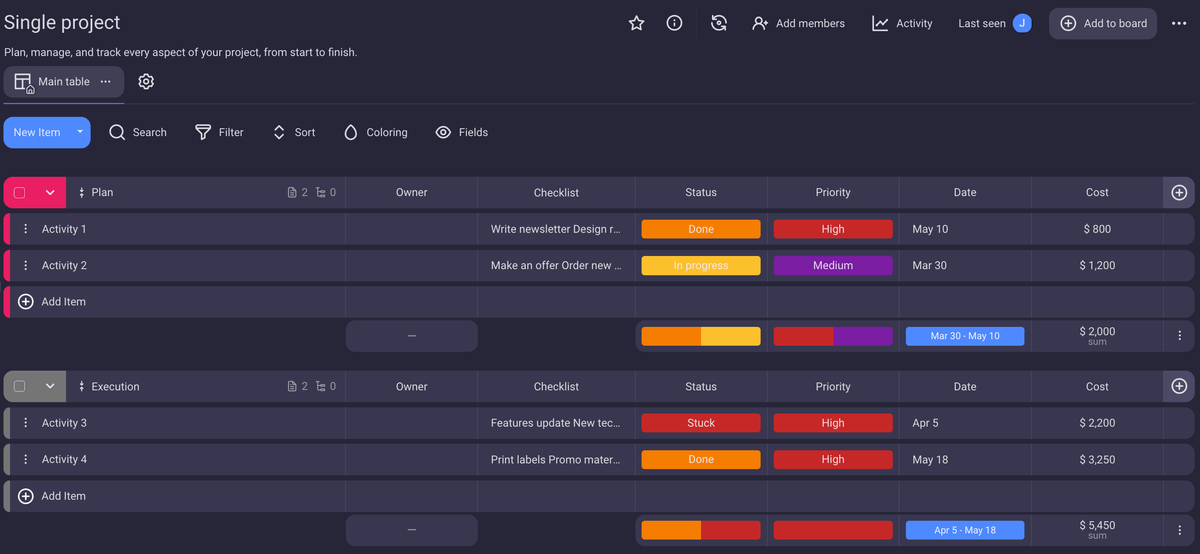
In a nutshell, a good project management app allows managers to visualize and organize projects efficiently, all the while keeping all essential information in one place.
We also asked Zoran Vizmeg about what he finds the most useful about PM software and if he has any preferences:
“You can track tasks and create roadmaps inside a spreadsheet or on a whiteboard, but the main point of project management tools is to help you in that field.
These days, there are a lot of project management tools on the market, and whatever you choose, it will certainly help you to some extent. Each tool has pros and cons, and you can go through them and evaluate whatever suits your organization.
Jira and ClickUp can certainly help a lot, but Plaky can offer a bit more. It’s easy to use, colorful, has an intuitive interface, and good training resources.”
#4 Communication
Every team needs to chat on a regular basis to exchange thoughts and ideas. The tools used for managing tasks don’t cover this necessity entirely as not all conversations are task-related.
This is why every company uses a communication tool like Pumble.
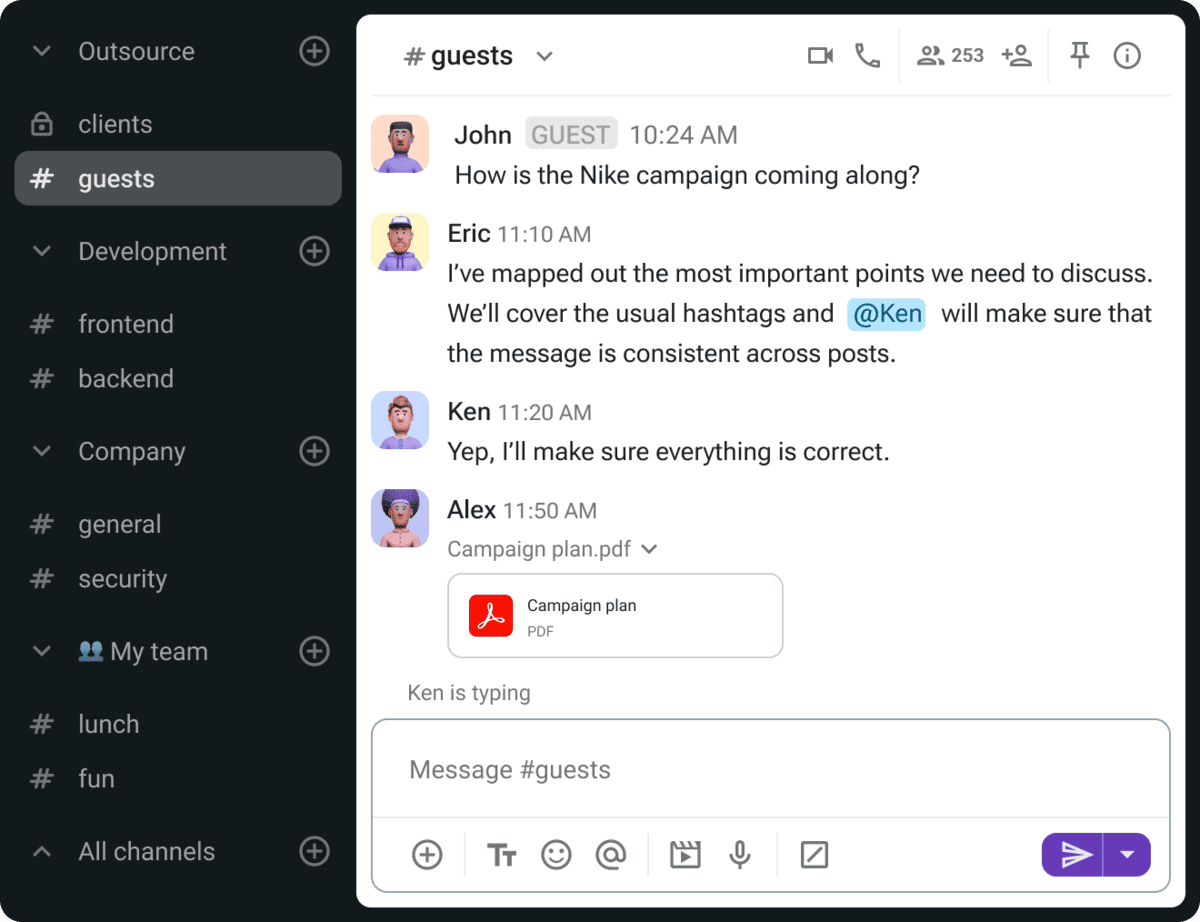
Pumble allows project managers to:
- Create specific channels and organize them however they wish,
- Communicate directly with team members,
- Set up temporary group chats, and more.
Overall, an app like Pumble saves time and opens up clear communication channels for everyone in the workspace. At the same time, with unlimited message history, it saves and keeps all messages and files within reach.

How to become a project manager
Almost anyone can become a project manager and build a successful career. Here are some of the options:
- Earn a university degree — There are universities and colleges around the world that offer degrees in project management. Those who’ve studied project management and have earned appropriate certifications can hope to land a role as a junior project manager.
- Acquire a project management certification — A certification is not necessary, but it certainly helps when it comes to landing a PM job, especially if you don’t have any prior qualifications.
- Gain experience through internships and volunteering — For people without a degree or certification, internships are the best way to go about becoming a project manager.
Take your project management skills to the next level with Plaky
For those who find this career to be their true calling and are ready to take on the many challenges of project management, the job can also be extremely rewarding.
The good news is that the road to project management is open to anyone. So, if at any point in life, you decide that you are suited for this “virtually recession-proof” position, all it takes is a little effort to get you going.
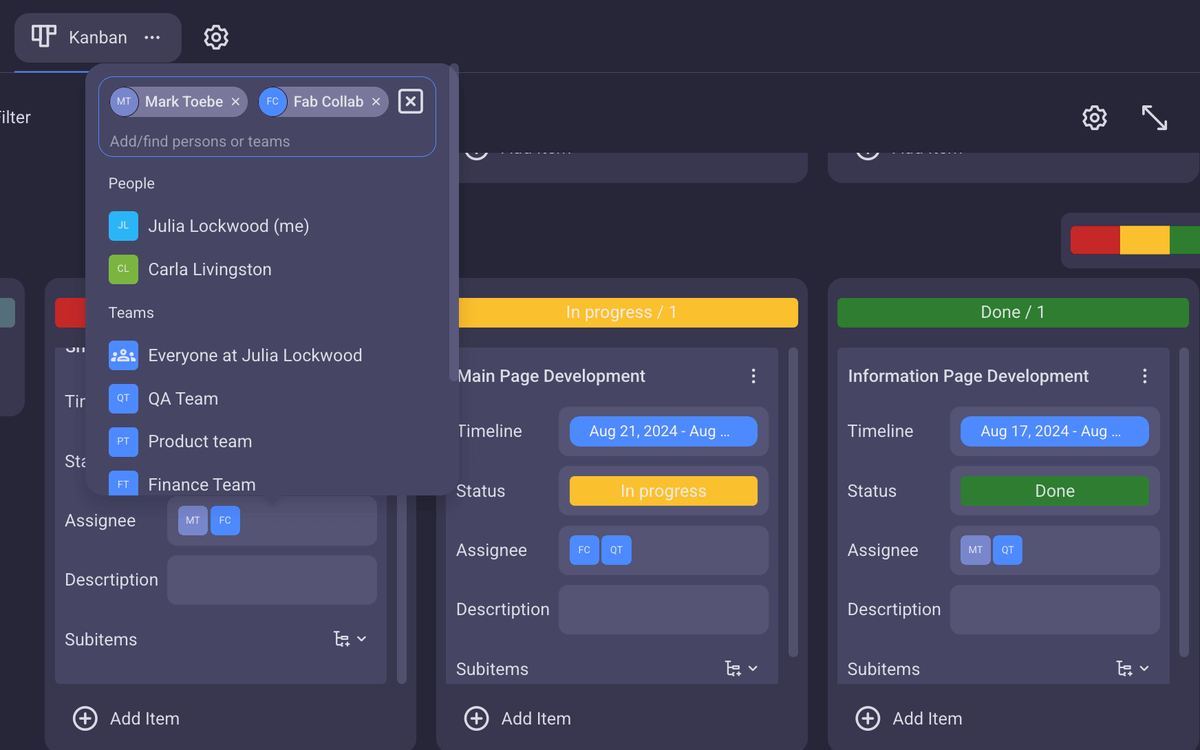
Being a project manager requires unparalleled organizational ability, excellent communication skills, and mental fortitude. When you add a project management app like Plaky to the mix, you can achieve great results in managing limited resources and deadlines.
Plaky helps managers keep an eye on all project activities and how they’re progressing. At the same time, though, it favors flexibility by allowing you to reassign and reschedule tasks easily.
Better yet, Plaky allows for real-time collaboration, which has become a necessity in today’s dynamic world where quickly adapting to circumstances is a crucial skill.
Become the project manager you KNOW you can be. Hone your skills further with Plaky!
How we reviewed this post: Our writers & editors monitor the posts and update them when new information becomes available, to keep them fresh and relevant.