



Como saber se um projeto está no rumo certo e se será bem-sucedido? Os indicadores de desempenho no gerenciamento de projetos oferecem uma resposta precisa, com base em dados concretos.
Hoje em dia, não há espaço para suposições quando se trata de gerenciar orçamentos, prazos e as equipes envolvidas. Com a ampla gama de softwares disponíveis, registrar e analisar dados tornou-se uma tarefa muito mais fácil e eficiente do que nas décadas anteriores.
Então, por que não aproveitar a oportunidade de apresentar o progresso do seu projeto com confiança?
Descubra o que são os indicadores de desempenho no gerenciamento de projetos, seus diferentes tipos e como medí-los de forma eficaz.
- Indicadores de desempenho no gerenciamento de projetos são usados para medir o progresso e o desempenho de um projeto.
- Ao monitorar esses indicadores regularmente, os gerentes de projetos podem tomar medidas corretivas a tempo, evitando falhas e assegurando o sucesso do projeto.
- A melhor maneira de acompanhar seus projetos é com ferramentas de gerenciamento de projetos.
- Cada área possui indicadores específicos, que nem sempre se aplicam a todos os tipos de projeto.
O que são indicadores de desempenho de projeto?
São indicadores numéricos que mostram o desempenho e o progresso e o sucesso geral do projeto.
Como gerente de projeto, você pode monitorar as métricas corretas, identificar riscos potenciais, aprimorar a tomada de decisões e manter os projetos alinhados aos objetivos de negócios.
As métricas comuns de projeto incluem:
- Desempenho do cronograma
- Utilização do orçamento
- Taxas de conclusão de tarefas
- Alocação de recursos
- Produtividade da equipe
Essas e outras métricas nos dão informações valiosas sobre a eficiência com que um projeto está sendo executado e se ele está no caminho certo para atingir seus objetivos.
Em vez de confiar em suposições, as equipes podem usar informações baseadas em dados para identificar problemas com antecedência, otimizar fluxos de trabalho e melhorar continuamente os resultados dos projetos.
Por que os indicadores de projeto são importantes?
As métricas de gerenciamento de projetos ajudam você a:
- Manter os projetos em andamento no caminho certo
- Aprender com os erros do passado
- Definir expectativas para projetos futuros
Para gerenciar riscos com eficácia, é fundamental ter acesso a dados precisos em tempo real. Essas informações permitem que gestores de projeto identifiquem sinais de alerta cedo e atuem prontamente para garantir o sucesso do projeto.
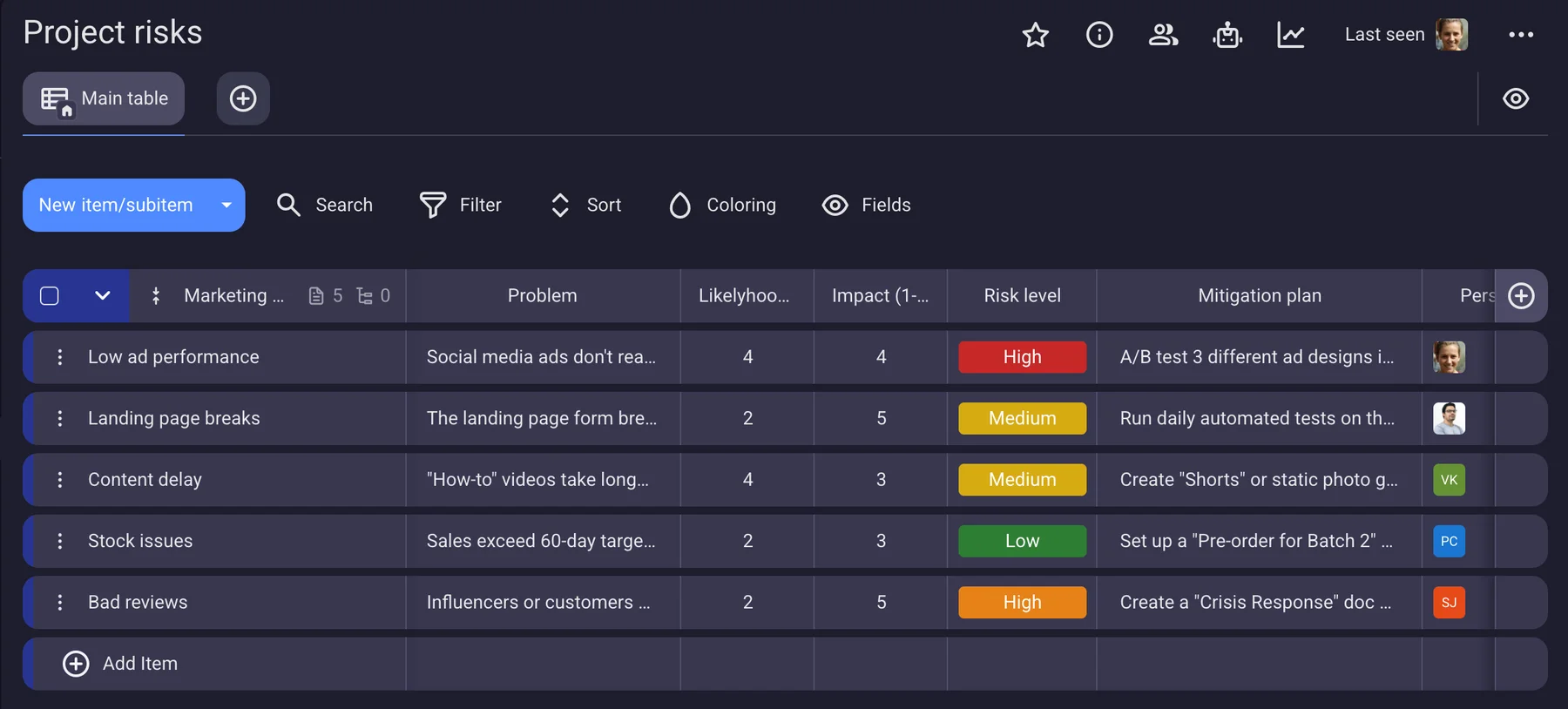
Com as métricas coletadas e analisadas, os gerentes de projeto podem aprimorar suas habilidades de planejamento.
Esses dados devem mostrar onde e por que suas estimativas estavam erradas, quais recursos você não utilizou adequadamente e quais custos foram desproporcionais. Como resultado, você poderá fazer planos melhores para o futuro e demonstrar seu sucesso também por meio de dados.
Como implementar e acompanhar métricas de gerenciamento de projetos
O acompanhamento eficaz das métricas de gerenciamento de projetos exige consistência e visibilidade.
As equipes devem começar selecionando um pequeno número de métricas essenciais e relevantes para seu trabalho, já que acompanhar métricas demais pode tornar os relatórios complicados e tirar o foco do que realmente importa.
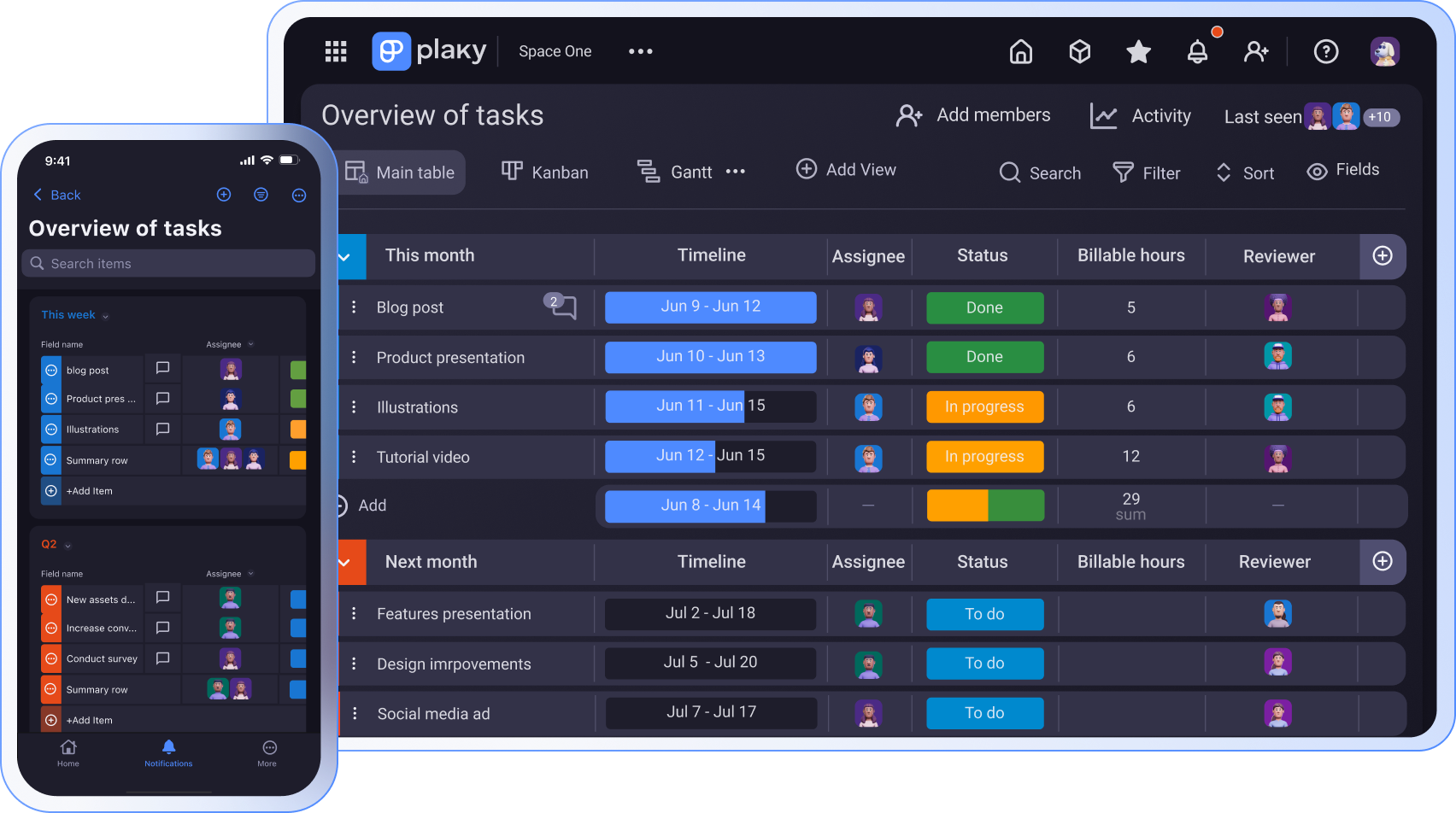
Depois de selecionar as métricas, elas devem ser monitoradas por meio de painéis centralizados que forneçam informações em tempo real sobre o progresso do projeto. A maneira mais fácil de acompanhar o progresso é usando ferramentas de gerenciamento de projetos, como o Plaky.
No Plaky, você pode criar seus próprios painéis e avaliar facilmente o progresso do projeto usando campos personalizados que acompanham as métricas necessárias. Ou, se preferir, pode escolher entre uma variedade de modelos prontos do Plaky para acelerar o processo.
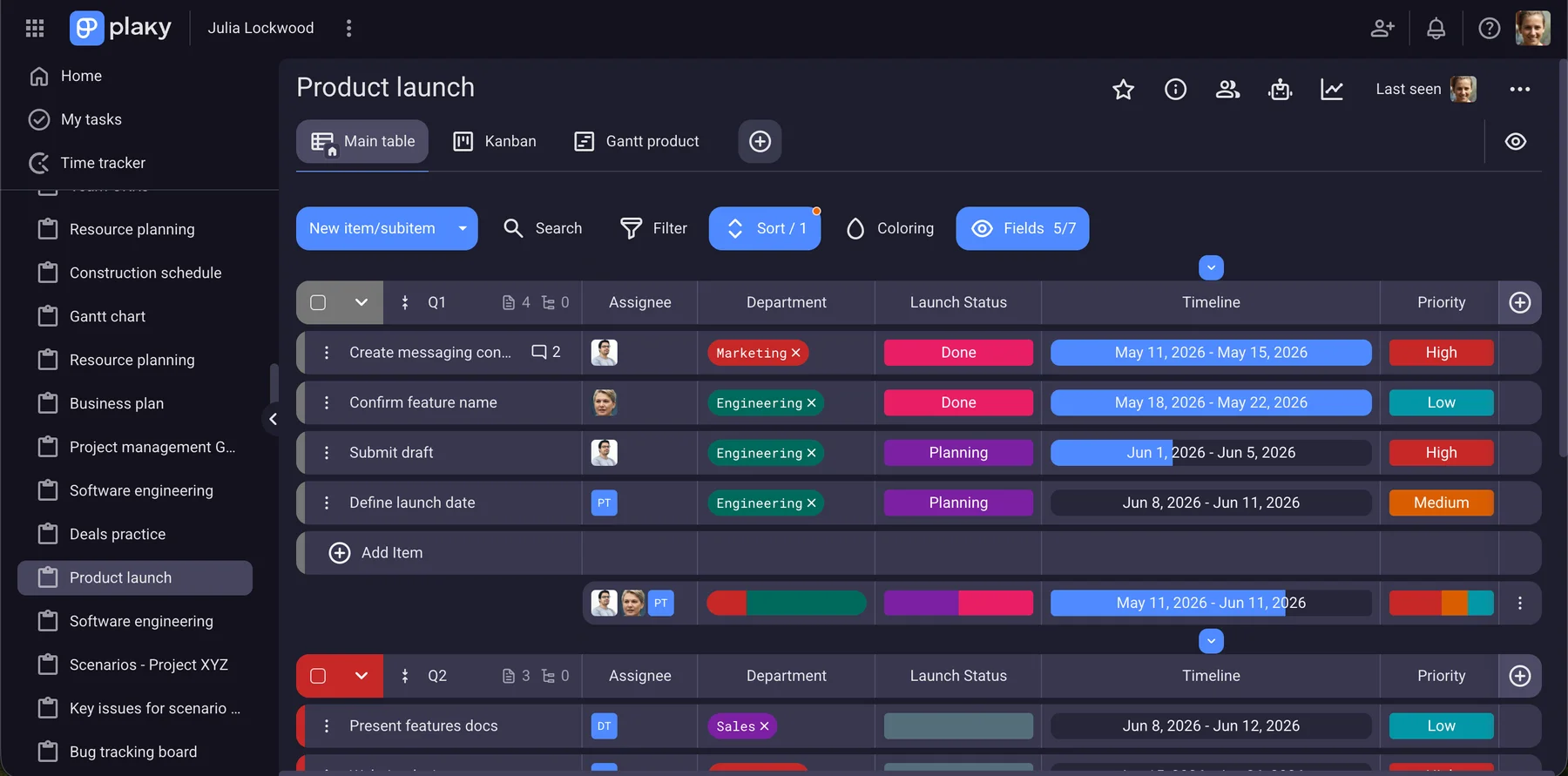
Acompanhe seus projetos no Plaky
Com as informações coletadas pela sua ferramenta de gerenciamento de projetos, você poderá identificar atrasos ou gargalos e analisar seu progresso com facilidade. Mais importante ainda, você poderá identificar esses problemas antes que eles impactem seu projeto em uma escala maior.
Por fim, as métricas do projeto devem orientar a ação. Quando esses indicadores revelarem problemas recorrentes, as equipes devem investigar a causa raiz e ajustar os fluxos de trabalho para melhorar o desempenho futuro.
Como uma agência de marketing utiliza indicadores de gerenciamento de projetos
Vamos ver um exemplo.
Imagine que uma agência de marketing perceba que os projetos de seus clientes frequentemente não cumprem os prazos. Para resolver o problema, a equipe decide monitorar diversas métricas do projeto, incluindo:
- Taxa média de conclusão de tarefas
- Distribuição da carga de trabalho
- Tempo de entrega das campanhas
- Número de solicitações de revisão
- Tempos de aprovação
Utilizando uma plataforma de gerenciamento de projetos como o Plaky, a agência coleta dados automaticamente e revisa os resultados periodicamente.
Após vários ciclos de relatórios, os gerentes descobrem que a maioria dos atrasos ocorre na fase de feedback dos clientes. Eles respondem introduzindo prazos para aprovação, criam modelos de feedback padronizados e implementam lembretes automatizados.
Isso leva a tempos de resposta mais rápidos e fluxos de trabalho mais eficientes. A agência trabalha de forma mais inteligente e os clientes obtêm resultados melhores e mais rápidos.
Tipos de indicadores de projeto
Existem diversas métricas de projeto que você pode utilizar para avaliar o desempenho do seu projeto. Os dados e os indicadores em que os gerentes de projeto confiam variam de acordo com o setor em que atuam e com os resultados considerados importantes pelos stakeholders.
Embora não exista uma classificação oficial de métricas no gerenciamento de projetos, há quatro grupos essenciais de indicadores de desempenho que todo gerente deve monitorar:
- Indicadores de escopo
- Indicadores de custo
- Indicadores de cronograma
- Indicadores de qualidade
Indicadores de escopo
As métricas de escopo são indicadores que rastreiam, definem e controlam o tamanho e os limites de um projeto.
No gerenciamento de projetos, o escopo é um dos elementos mais importantes de um projeto, pois define a meta, os prazos e as entregas do projeto.
Quanto mais longo e complexo for o projeto, maior a probabilidade de seu escopo mudar, resultando em um aumento gradual.
A melhor maneira de evitar o seu aumento é definindo o escopo da forma mais precisa possível antes da data de início do projeto. Portanto, junto com as partes interessadas do projeto e sua equipe, você deve elaborar uma descrição clara do projeto, com:
Acompanhe os indicadores do escopo do projeto no Plaky
Indicadores de custo
Os custos estão diretamente relacionados ao orçamento de um projeto, então os gerentes de projeto devem controlá-los o tempo todo.
A importância do controle de custos também se reflete no número de indicadores que ajudam a rastrear os custos planejados e os custos reais.
Os principais indicadores de custo são:
- Valor agregado
- Variação de custo
- Índice de desempenho de custo
Valor agregado (VA)
Valor agregado é o valor do trabalho realizado até um certo ponto no projeto. A fórmula para calcular o valor agregado é:
VA = % do trabalho concluído x orçamento total do projeto
Este indicador mostra se o valor alcançado corresponde ao valor valor planejado ou não. A fórmula pode ser usada em qualquer ponto durante o desenvolvimento do projeto para avaliar se está indo de acordo com o planejado.
Vamos ver um exemplo.
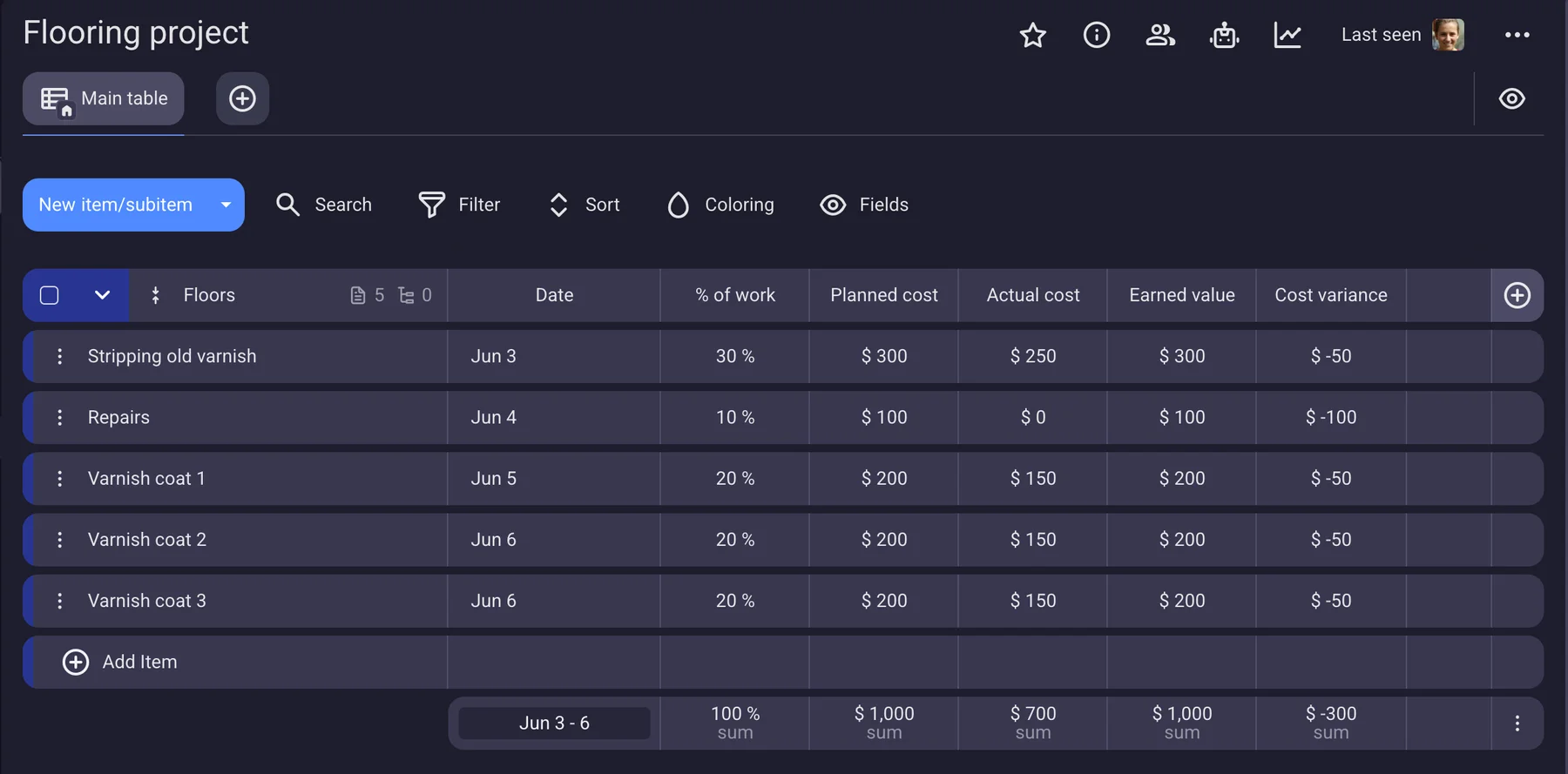
Suponha que uma família contratou empreiteiros para refazer os pisos de 2 cômodos. O orçamento é de US$1.000, e o tempo estimado para concluir o projeto é de 3 dias.
No final do dia 2, os pisos foram decapados e envernizados duas vezes, o que significa que resta mais 1 camada para aplicar. A aplicação de cada camada de verniz representa 20% de todo o projeto, portanto, no total, 80% do trabalho foi concluído.
Agora podemos aplicar a fórmula para verificar o valor agregado atual do projeto.
VA = 80% x $1,000 = $800
💡 Dica profissional do Plaky
O valor agregado é a chave para o gerenciamento de valor agregado, uma metodologia que aprimora o desempenho do projeto. Saiba mais sobre GVA em nosso guia:
Variação de custo (VC)
A variação de custo é um parâmetro que mostra a diferença entre o custo planejado e o custo real (CR) em qualquer ponto do projeto.
Para calculá-lo, primeiro você precisa calcular o valor agregado.
VC = VA – CR
VC = % de trabalho concluído x orçamento total do projeto – CR
Se o resultado for maior que zero, há uma variação de custo positiva, o que significa que seus custos estão abaixo do orçamento planejado.
Por outro lado, uma variação de custo negativa mostra que você está gastando demais e deve controlar suas despesas.
Acompanhamento da variação de custos no Plaky No nosso exemplo de piso, o projeto está indo conforme o planejado. Veja como podemos calcular a variação de custo:
CV = $800 – $600 = $200
O valor positivo nos mostra que o projeto está US$ 200 abaixo do orçamento.
Índice de Desempenho de Custos (CPI)
O índice de desempenho de custos mostra o quão eficiente o projeto é em termos de custos. Ele utiliza os mesmos valores da variação de custos, mas é calculado de forma ligeiramente diferente:
IPC = VA / CR
IDC = % de trabalho concluído x orçamento total do projeto/ CR
Se o resultado for:
- Acima de 1 — o projeto está abaixo do orçamento.
- Igual a 1 — tudo está indo conforme o planejado.
Os gerentes de projeto devem se preocupar e reagir se o IDC estiver abaixo de 1. Este resultado indica que o projeto está acima do orçamento.
Embora já tenhamos estabelecido em nosso exemplo que o projeto está abaixo do orçamento, ainda podemos aplicar a fórmula:
IPC = $800 / $600 = 1.33
Como você pode ver, o IDC está acima de 1, confirmando nossa conclusão de que o projeto está abaixo do orçamento.
Fique de olho nos custos do projeto com o Plaky
Indicadores de cronograma
Cumprir o prazo de um projeto é um dos principais requisitos no gerenciamento de projetos.
Os projetos geralmente são divididos em fases, e cada fase com metas específicas, cada uma com seu próprio prazo.
Abordar as fases do projeto de forma segmentada, com uma meta de cada vez, facilita o acompanhamento contínuo do cronograma. Algumas dos principais indicadores de cronograma utilizadas para manter o projeto sob controle são:
Variação de Cronograma (VC)
Mede a quantidade real de trabalho realizado em relação ao trabalho planejado. Ela permite que os gerentes de projeto verifiquem se a equipe está concluindo as tarefas programadas no prazo em qualquer momento.
Para calcular a variação de cronograma , você precisará calcular o valor agregado, assim como para a variação de custo. Você também precisará descobrir o valor planejado (VP)
Variação de cronograma = VC – valor planejado
(VP) = % de trabalho concluído esperado x orçamento total do projeto
Variação de cronograma = (% do trabalho concluído – % do trabalho concluído esperado) x orçamento total do projeto
Se o resultado for 0, significa que todas as tarefas foram concluídas no prazo e não há necessidade de se preocupar. No entanto, se for abaixo de zero, sua equipe está atrasada.
Vamos olhar nosso exemplo novamente. O plano era terminar uma camada de verniz no dia 2, o que teria sido 50% do trabalho. Em vez disso, 80% do projeto foi concluído:
Variação de cronograma = (80% – 50%) x $,1000 = $300
O resultado positivo nos mostra que o projeto está bem adiantado.
IDP (Índice de Desempenho de Prazo)
O IDP mede a conformidade do projeto com o trabalho planejado.
O IDP é semelhante à Variação de cronograma, pois serve ao mesmo propósito e usa os mesmos valores, mas é calculado de forma ligeiramente diferente:
IDP = VA (valor agregado) / VP (valor planejado)
IDP = % de trabalho concluído / % do trabalho concluído esperado
Se o valor do IDP for igual a 1, o projeto está dentro do cronograma. Por outro lado, se o resultado for maior que 1, as tarefas foram concluídas antes do cronograma, e vice-versa.
Em nosso exemplo, a variação do cronograma mostrou que o projeto estava adiantado. Vamos ver o que o índice diz:
IDP = 80% / 50% = 1.6
O IDP está acima de 1, confirmando que o trabalho está adiantado.
Melhore o agendamento de projetos com o Plaky
Indicadores de qualidade
As métricas de qualidade medem a conformidade do produto ou do processo com os padrões de qualidade estabelecidos. Afinal, a eficiência de custos e o cumprimento antecipado dos prazos pouco importam se o resultado final estiver abaixo da média.
Cada setor tem pelo menos uma dezena de métricas específicas usadas para medir seu desempenho, e cada empresa desses setores tem ainda mais parâmetros para acompanhar.
Por exemplo, no setor de comércio eletrônico, as equipes de vendas acompanham o estoque e os custos de publicidade relacionados às vendas. Essas métricas não têm relevância para equipes de desenvolvimento de software, que acompanham gráficos de consumo de recursos e comparam as estimativas de duração das tarefas com o tempo real de conclusão.
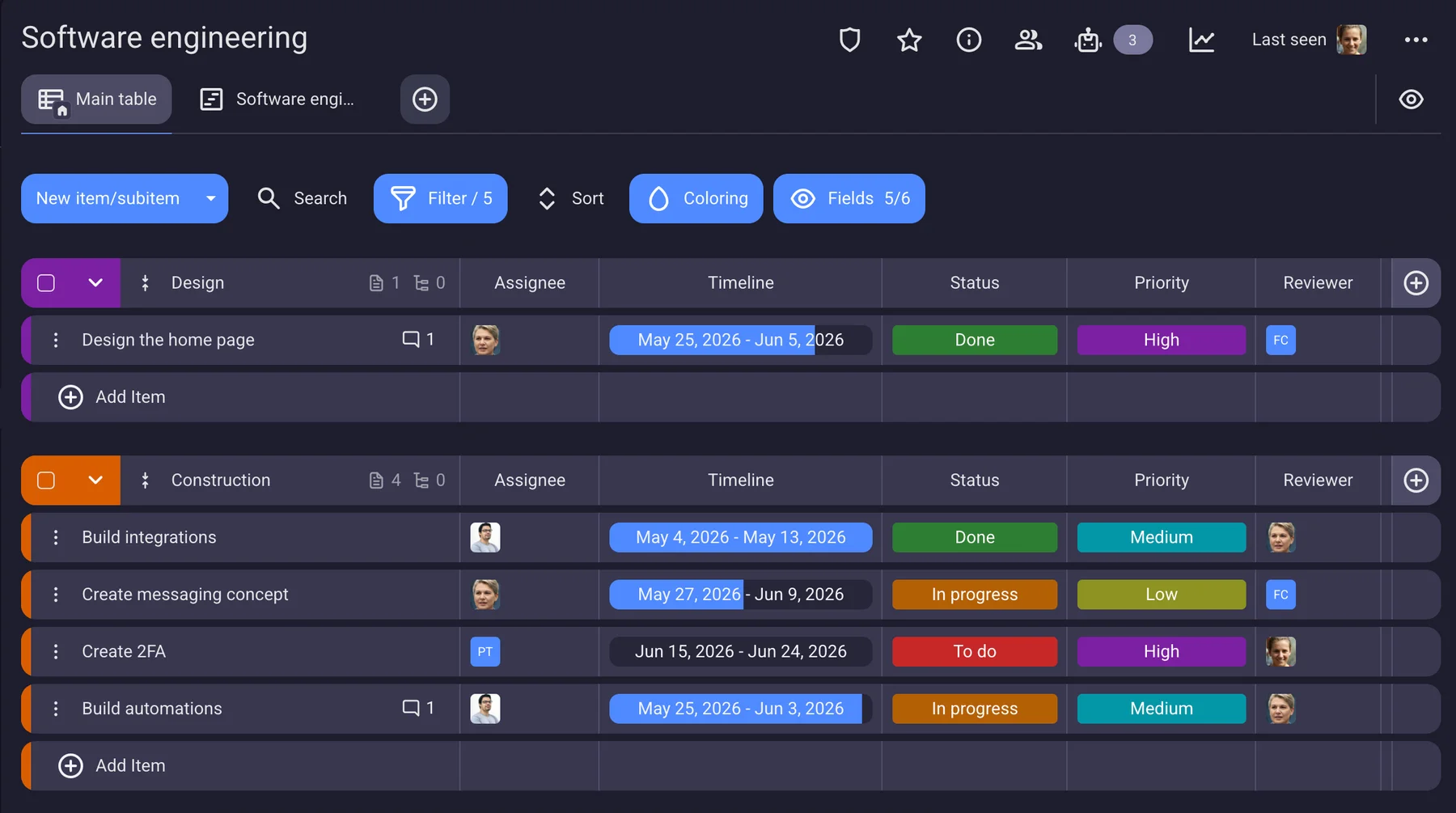
Os restaurantes são outro exemplo de setor que utiliza métricas completamente diferentes, como padrões sanitários e satisfação dos clientes. Por fim, as equipes de marketing costumam medir a fidelidade dos clientes usando o Net Promoter Score (NPS).
De qualquer forma, as empresas precisam acompanhar as tendências do setor e adaptar suas métricas aos padrões atuais. Além disso, os gerentes devem acompanhar regularmente as métricas de qualidade e intervir caso os resultados não sejam satisfatórios.Software gratuito de gerenciamento de projetos
Métricas vs. KPIs (Indicadores-Chave de Desempenho)
As métricas são indicadores calculados que mostram se o projeto está atingindo os valores planejados ao longo de sua duração.
Indicadores-chave de desempenho (KPIs) são metas de negócios de alto nível que as equipes buscam atingir durante um determinado período de tempo.
Aqui está uma análise das principais diferenças entre Indicadores e KPIs:
| Parâmetro | Indicadores | KPIs |
|---|---|---|
| Nível de negócios | Operational | Estratégica |
| Time frame | Curto prazo | Longo prazo |
| Escopo | Medindo o desempenho do projeto | Medir o progresso em direção às metas de negócios |
| Alcance | Projetos ou equipes | Departamentos e organizações inteiros |
| Perspectiva | Presente e passado | Presente e futuro |
Para ilustrar, se a equipe de marketing de uma empresa de desenvolvimento de software fizer postagens em mídias sociais para impulsionar assinaturas de produtos, eles usarão os seguintes indicadores:
- Número de postagens
- Número de curtidas
- Alcance
- Número de cliques
- Custos de publicidade
- Número de novos assinantes resultantes da campanha
No entanto, o KPI que eles usariam para medir o sucesso de sua campanha de marketing poderia ser algo como:
- 400 novos assinantes do produto até o final do ano
- Aumentar o reconhecimento da marca, alcançando 10.000 visitantes na página
- Aumentar a receita com assinaturas em 20% no prazo de 12 meses
Como você pode ver, as métricas medem os resultados em um determinado momento e os comparam com o que foi planejado.
💡 Dica profissional do Plaky
Saiba mais sobre como você pode medir o desempenho da sua equipe com 4 grupos diferentes de KPIs em nosso artigo:
Rastreie os KPIs do seu projeto utilizando o Plaky
Não sabe como monitorar indicadores de projeto? Experimente o Plaky
Você pode organizar projetos inteiros e ficar de olho regularmente em seus indicadores com uma ferramenta de gerenciamento de projetos como o Plaky. Saiba como:
- Criar um quadro de projeto
- Adicionar campos personalizados
- Convidar sua equipe e clientes
- Criar itens e anexar os arquivos necessários
- Agrupar itens
- Agregar dados com linhas de resumo
Quer você escolha um modelo de gerenciamento de projeto pré-fabricado ou crie-o do zero, você pode personalizar seu quadro de projeto para incluir todos os indicadores que você precisa monitorar.
O design intuitivo do Plaky o torna fácil de usar e adaptar às suas necessidades, desde organizar seu trabalho até se comunicar com sua equipe.
Além disso, as funções disponíveis eliminam até mesmo a necessidade de uma calculadora, pois os valores de cada coluna podem ser calculados automaticamente na linha de resumo.
Dessa forma, você economizará tempo acompanhando indicadores rapidamente enquanto gerencia todos os outros aspectos do seu projeto em uma ferramenta só!
Interessado em gerenciar seus projetos e monitorar indicadores diariamente com facilidade? Crie uma conta gratuita no Plaky agora!
Como revisamos esta publicação: Nossos redatores e editores monitoram as publicações e as atualizam quando novas informações são disponibilizadas, para mantê-las atualizadas e relevantes.